Circulation Candidate Screening

See If You Qualify for the Circulation Approach Most Treatments Miss

Eligibility Check · 60 Seconds · No Email

First, what's your age?

Do you have burning, numbness, or tingling in your feet?

Is it in both feet?

Does the pain shoot down one leg into a single foot?

We mean pain that starts higher up, in your back, hip, or thigh, and travels down one leg into that foot. Not the burning or numbness you feel in both feet.

Can you still feel at least something in your feet, even pain?

Do you feel it in your hands too?

Last question, for your safety. Do you have a pacemaker, an implanted defibrillator, or a blood clot (DVT)?

Checking your answers against the profile this device is built for…

This may not be the right match for you.

Pain that shoots down one leg into a single foot usually points to a pinched nerve in the back, like a bulging disc. That's a different problem than neuropathy. This device is made for neuropathy in both feet, so it's probably not the right fit for that pattern.

This may not be the right match for you.

NeuroGo is built for the burning, numbness, and tingling of foot neuropathy. If you're not feeling those symptoms in your feet, it likely isn't the right fit. We'd rather tell you straight than sell you something you don't need.

This may not be the right fit right now.

This device works by waking up nerves that are still alive but starved of blood flow. If there's truly no feeling left in your feet, the nerves may be too far along for it to reach. So we'd rather tell you straight than sell you something that won't help.

For your safety, this isn't the right fit.

NeuroGo uses gentle electrical stimulation, and that isn't safe with a pacemaker, implanted defibrillator, or an active blood clot. That's one rule we won't bend, even to make a sale.

1 of 7
Your Results

You’re a Candidate for Circulation Therapy

Your answers fit the pattern of circulation-related neuropathy.

Why You Qualify
  • It’s in both feet, the neuropathy pattern, not a one-sided pinch
  • It doesn’t shoot down one leg, so it doesn’t look like a disc or sciatica
  • You can still feel your feet, so the nerves are alive and can respond
  • No pacemaker, defibrillator, or blood clot, none of the flags that rule this device out

The common thread behind all of it: the nerves in your feet are starving for blood flow — the one thing pills, creams, and supplements never fixed.

Keep reading ↓

Dr. Darrin King

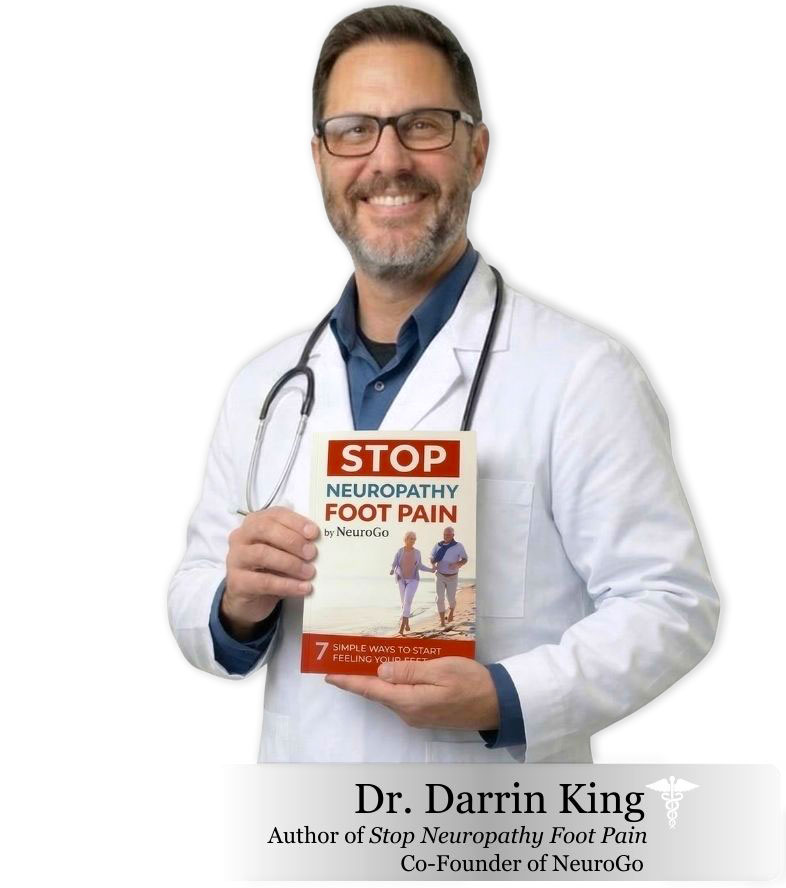
I'm Dr. Darrin King. For years I ran a medical pain clinic, sitting across from people whose feet burned, tingled, or had slowly gone numb. And one thing took me far too long to see — the real reason so little had ever worked for their feet. Once I finally understood it, I couldn't unsee it. Let me show you what almost everyone misses.

What’s Actually Causing Your Neuropathy

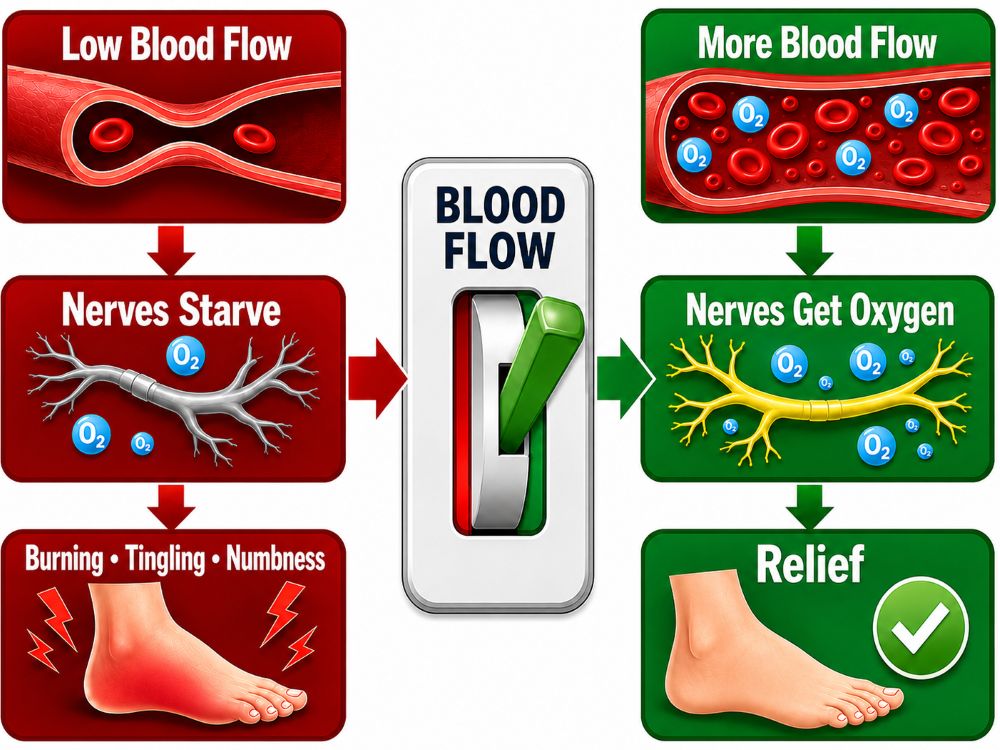
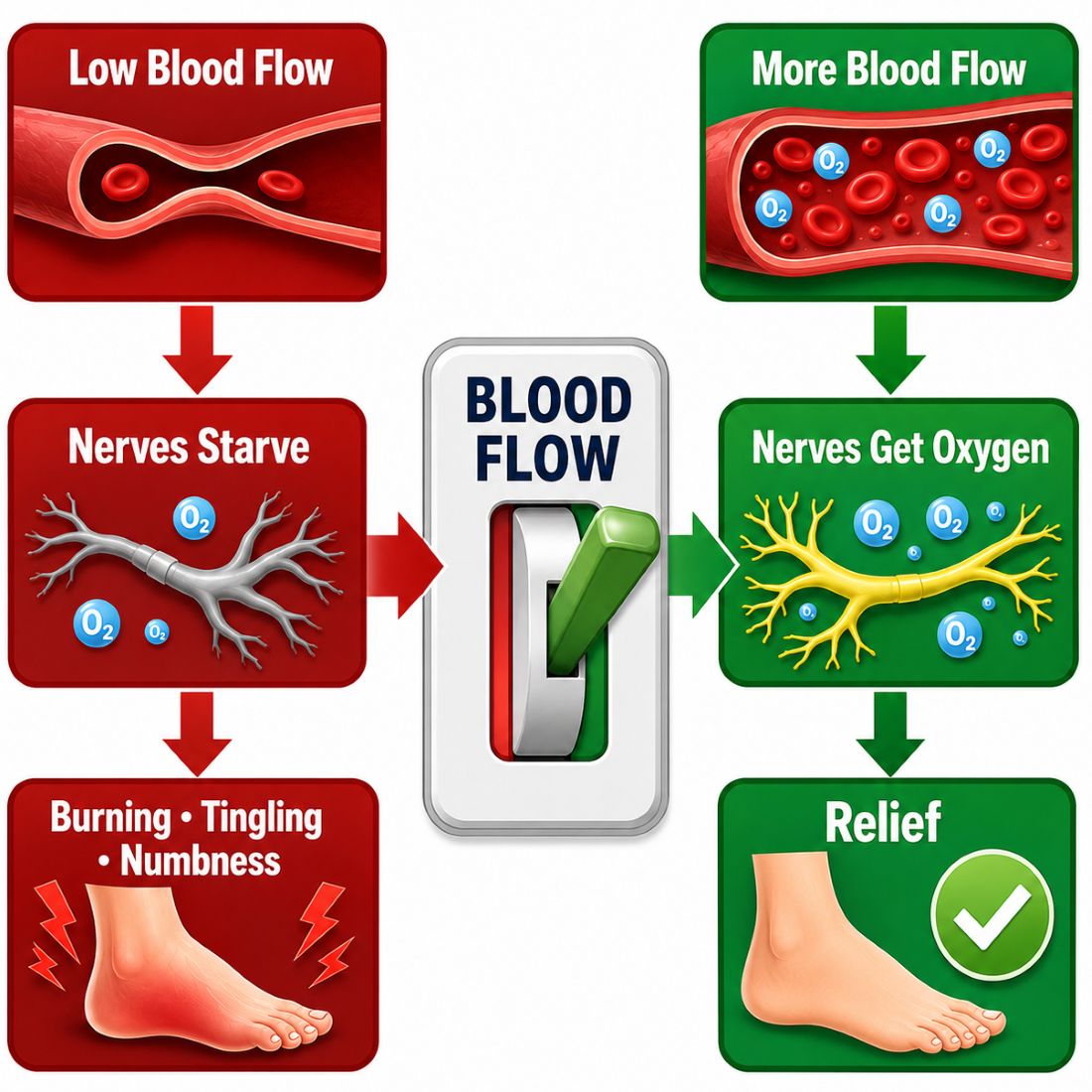
Blood flow is the switch. Shut it off, your nerves burn, tingle, and go numb. Turn it back on, they heal and the pain backs off.

How neuropathy runs on a blood-flow cycle: too little blood flow starves the nerves and causes burning, tingling and numbness, while restoring blood flow lets the nerves recover and brings relief How neuropathy runs on a blood-flow cycle: too little blood flow starves the nerves and causes burning, tingling and numbness, while restoring blood flow lets the nerves recover and brings relief

As long as you can still feel your feet, those nerves are alive, not dead. So they can still respond.[2] The only question left is how you bring that blood flow back.

The science behind itHow poor circulation leads to nerve pain

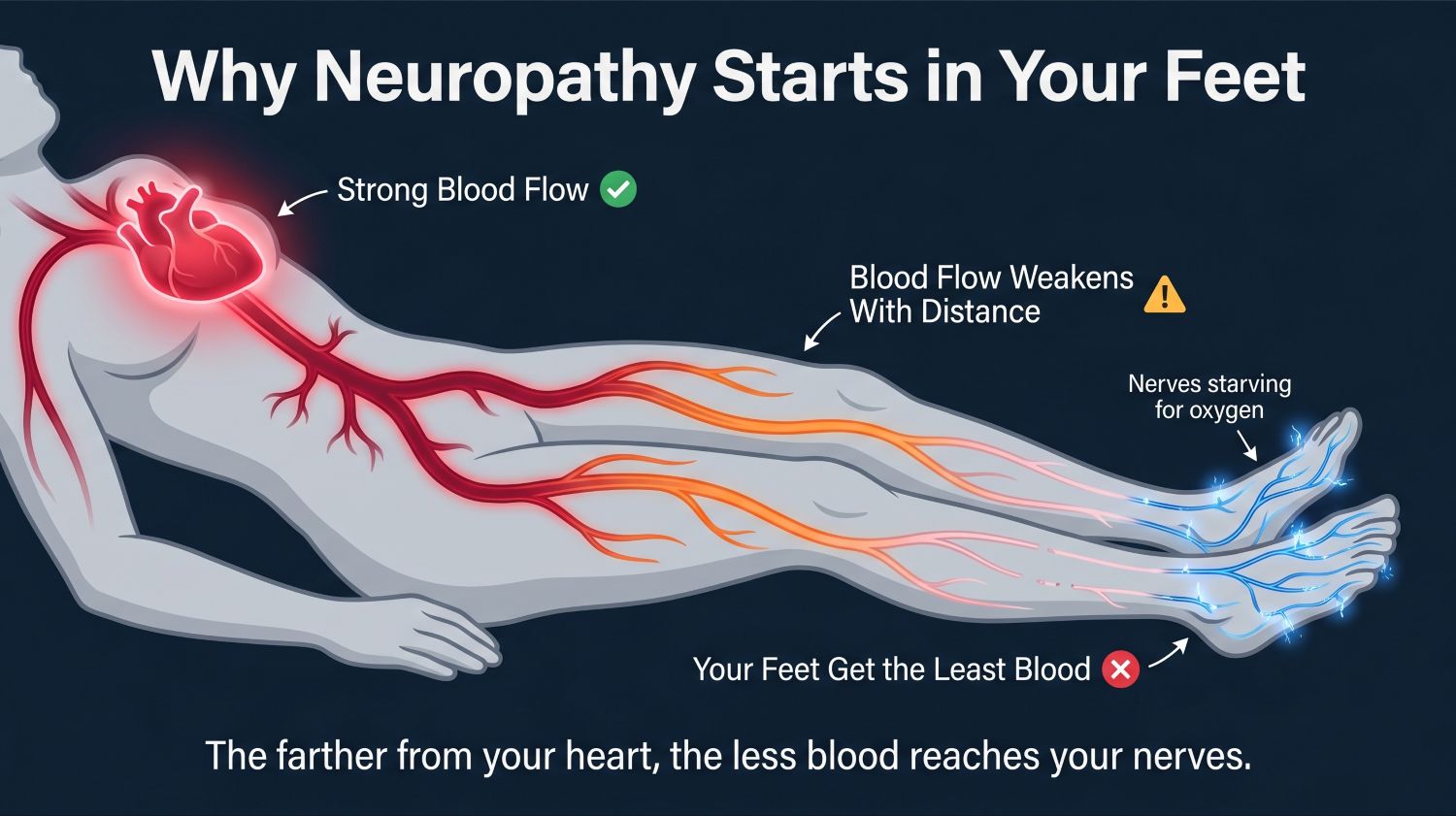
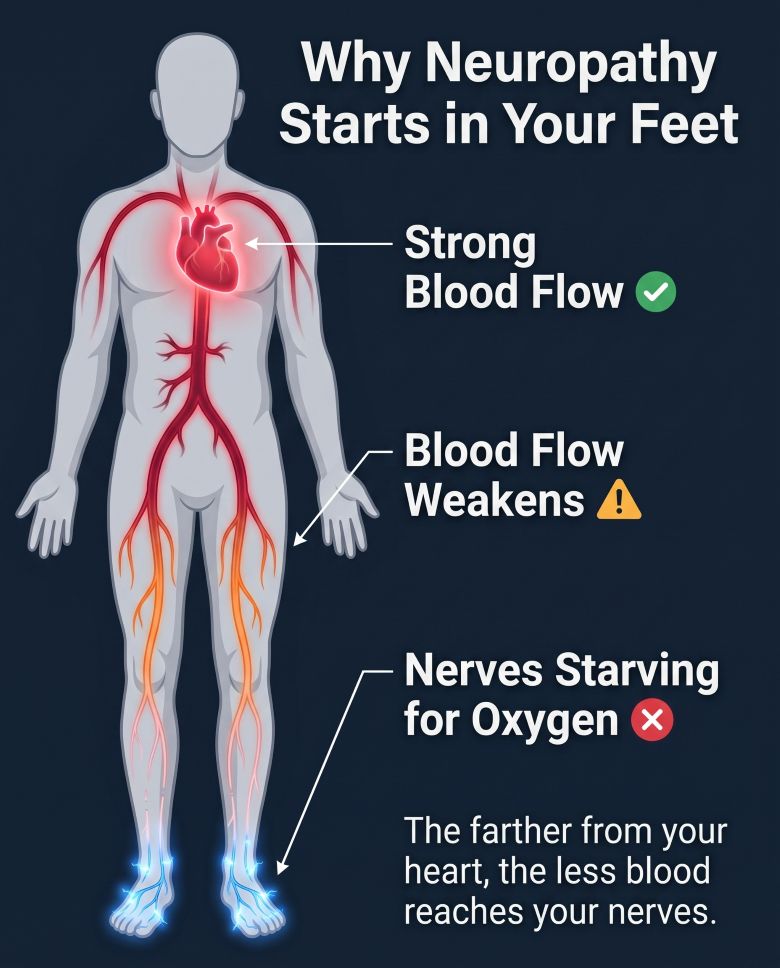
Everyone chases the nerve damage. Almost no one asks what's starving it. Your feet sit farthest from your heart, so when circulation drops, they're first to run short. And here's the part most people never hear: the nerves themselves have their own blood supply to lose.[1]

Blood flow weakens with distance from the heart, leaving the feet last in line for circulation Blood flow weakens with distance from the heart, leaving the feet last in line for circulation
Your feet sit farthest from your heart, so they are first to run short on blood flow.
1

Nerves have their own plumbing

Every nerve is fed by microscopic vessels of its own, the vasa nervorum, delivering the oxygen and fuel it needs to fire cleanly.

2

Starved, they misfire

When circulation to your feet falls, those tiny vessels can't keep up. Low on oxygen, the nerve sends faulty signals, felt as burning, tingling, and numbness.

3

Fed again, they settle

Restore the blood flow and oxygen returns while waste clears out. The irritated fibers calm down and get what they need to recover.

That's also why pills, creams, and supplements fall short. They quiet the signal but never touch the blood flow underneath it.

Pills & creams

Chase the pain signal

They can quiet what you feel. They do nothing for the blood flow underneath.

The missing half

Blood flow reaches the nerve

Bring more circulation back to your feet, and the irritated nerves behind the pain get what they have been short on.

You were not failing. You were working on half the problem.

The $15,000 Clinic Therapy I Shrank to Fit Your Living Room

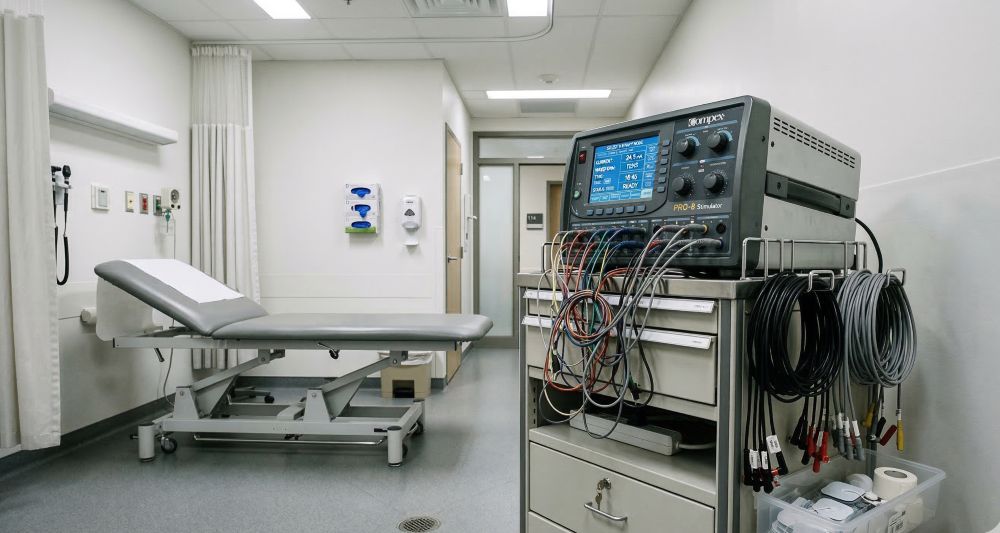
The answer already existed. Clinics have used it for years: NMES, short for neuromuscular electrical stimulation. It gently pumps fresh blood back down to your feet, the circulation your nerves have been starved of.

Clinical NMES equipment, large machines used in rehab departments
The clinic version of this technology can cost around $15,000.

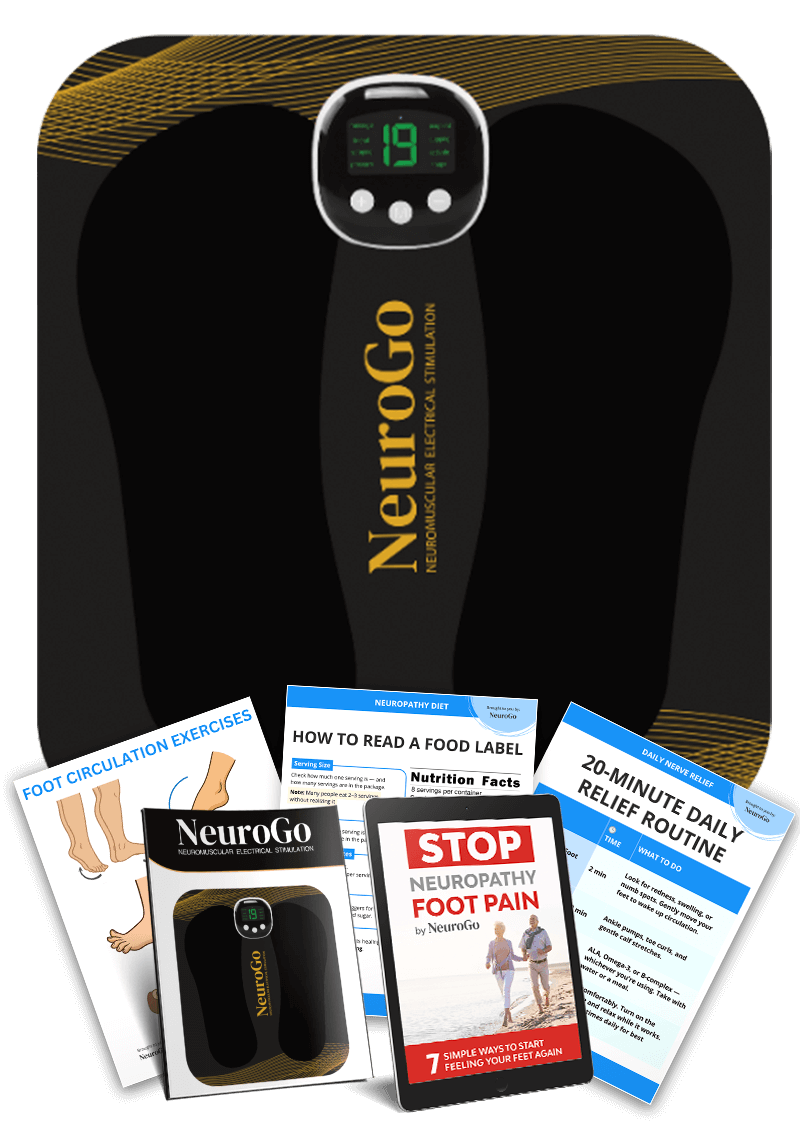
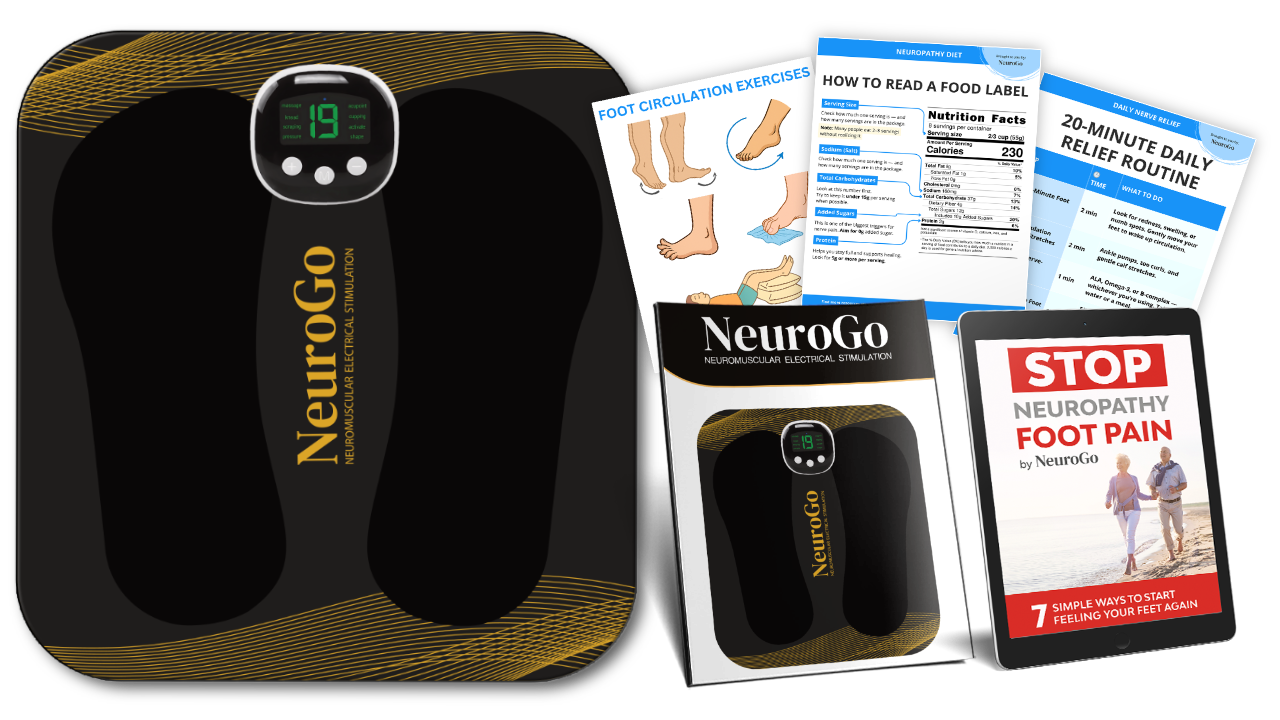
So I shrank it. I put the same therapy into a simple pad you rest your feet on at home, for a fraction of the cost. I called it NeuroGo, and I put my name on it. Because if it doesn't help you, I don't want your money.

How the therapy worksNMES, step by step

It stimulates the nerves in your feet and lower legs. The muscles squeeze and release on their own, pumping fresh blood back down to your feet for a temporary increase in circulation.[3]

That returning blood flow is what the nerves in your feet have been short on. And you don't lift a finger. The device does the work.

Pulse in. The muscles squeeze. The blood flows back to your feet. And the pain backs off.

The catch: the clinic version is the size of a nightstand and lives in a rehab department, not a living room. That's what I set out to fix.

Just 15 Minutes a Day to Lasting Relief

This won't take over your life. Nothing to tape on, nothing to strap, no app, no Wi-Fi. Here's the whole routine.

1

Rest your feet on the pad

Bare feet, in your favorite chair. Nothing to tape on or strap.

2

Press the button

Start low. Turn it up until you feel a gentle pulse. You stay in control the whole time. No shocks.

3

Sit back for 15 minutes

Watch TV. Read the paper. The device does the work.

What people tell us they feel

Many people feel something from the very first session. That's the blood flow coming back. It only gets better from there with regular use.

First Session

Warmth and tingling

Your feet feel warm. Your toes start moving on their own. For many, it's the first thing they've felt in a while.

Early On

Sleep starts improving

The burning at night starts to settle down. Less reaching for the ice pack. Less stiffness in the morning.

With Regular Use

A real difference

Walking feels steadier. The floor feels solid. The tingling is quieter. People around you start to notice.

*Individual results may vary. Testimonials reflect personal experiences and are not guaranteed outcomes.

Reviews From NeuroGo Users

4.7 ★★★★★ from 3,426 verified reviews
Brian B.★★★★★ ✓ Verified customer

Noticeable improvement. I've slept better the last two nights, and the everyday pain is less now, and not constant. I even woke up with zero pain and wondered if it was gone for good. I now believe I can be cured, which makes it easy to keep going.
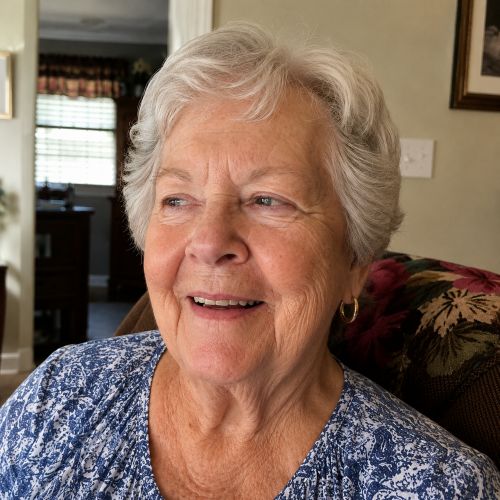
Marilyn H.★★★★★ ✓ Verified customer

I'm getting better sleep and not waking up from the neuropathy in my feet. In the mornings my feet aren't as numb and not tingling as much. I bought one for my neighbor who has it really bad, and he says it's helping him tremendously.

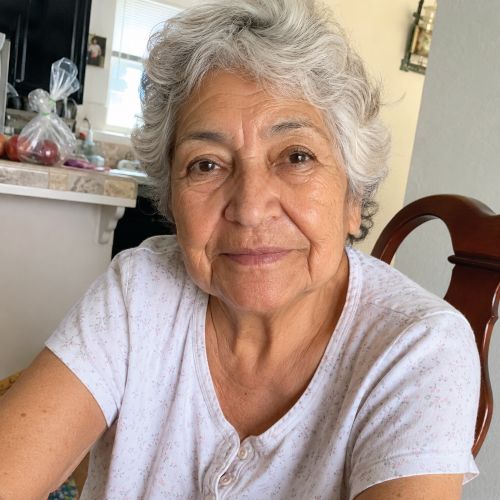
Carmen A.★★★★★ ✓ Verified customer

I'm 85 years of age. I work quite a bit out in my yard from 6am to 11am and feel well. I'm enjoying the NeuroGo and use it twice a day. It feels like my numbness is not as bad.

Lee K.★★★★★ ✓ Verified customer

After just a few weeks of using the NeuroGo, my neuropathy has subsided significantly. I really appreciate the guidance you've given me since I bought it. "Knead" is my favorite mode.

*Individual results may vary. Testimonials reflect personal experiences and are not guaranteed outcomes. Reviews may be lightly edited for length and clarity.

90-Day Money-Back Guarantee

Try It for 90 Days: Risk Free

NeuroGo works, with real, lasting relief that needs about 30 days of consistent daily use. You have up to 90 days to return it for a refund. Use it consistently for 30+ days and we'll cover return shipping. No hoops, no fees, no hassle. Zero risk. You only pay if it actually works.

Your Inside Health reader discount is applied automatically. One-time payment. No subscription. 90-day money-back guarantee.

Common Questions Before You Try It

Straight, honest answers to what people ask most.

Will it work for my kind of neuropathy?
NeuroGo works on the blood flow to the nerves in your feet. That's the one thing most kinds of neuropathy share, whether yours comes from diabetes, nerve damage with no clear cause, chemo, or surgery. The 90-day guarantee gives you time to try it without risk.
How soon will I feel a difference?
Many people feel the burning and tingling fade within the first few days, with more noticeable change over about 30 days of daily use. Individual results may vary.
Does it hurt? Will it shock me?
Not at all. It feels like a gentle pulse, almost like a light massage. You're in control the whole time. Start low and turn it up only as far as feels good. No pain, no shocks.
Can I use it with my medication?
Yes. NeuroGo isn't a pill. It's made to work right alongside your medicines, never to replace them.
I have a pacemaker or an implanted device, can I use it?
No. NeuroGo uses electrical stimulation, which isn't safe with a pacemaker, an implanted defibrillator, or an active blood clot (DVT). That's one safety rule we won't bend, even to make a sale. If this is you, please don't use it. Hold off during pregnancy as well.
What if it doesn't work for me?
You're covered by the 90-day money-back guarantee. Give it an honest 30 days, and if your feet don't feel better, send it back for a full refund. Because you gave it a fair try, we cover the return shipping.

Not Ready to Decide Today? Start With the Free Book.

No pressure, and nothing to buy. If you're still not sure, let me hand you the book I wrote for exactly this moment, so you can start helping your feet tonight, for free.

Send me the free book

Free, and it lands in your inbox in about a minute. No subscription, just the book.

✓ 100% free✓ Arrives in about a minute✓ No spam, unsubscribe anytime

Already decided? See the offer →

The free book, Stop Neuropathy Foot Pain, by Dr. Darrin King

Sources & Supporting Research

  1. NIDDK (NIH). Diabetic neuropathy: nerve damage and the small blood vessels that nourish the nerves. niddk.nih.gov
  2. Electrical stimulation to enhance nerve regeneration after peripheral nerve injury. pubmed.ncbi.nlm.nih.gov/26754579
  3. Electrical neural stimulation and cutaneous microvascular blood flow in patients with diabetic neuropathy. pubmed.ncbi.nlm.nih.gov/18403219

Important Safety Information

Indications for Use: NeuroGo is indicated for temporary relief of pain associated with sore and aching muscles in the legs and feet, symptomatic relief of chronic intractable pain, relief of pain associated with arthritis, and temporary increase of local blood circulation in the healthy muscles of the lower extremities. Not intended for use in any therapy or for the treatment of any medical conditions or diseases.

Contraindications: Do not use if you have an implanted defibrillator or deep vein thrombosis (DVT). Do not use during pregnancy. Consult your doctor before use if you have a cardiac pacemaker or other implanted electronic device. Do not apply over open wounds, rashes, or skin eruptions. If you have reduced sensation in your feet, start on the lowest setting. Do not use while driving, operating machinery, or in the bath. Always consult a qualified healthcare provider with any medical concerns.

Results Disclaimer: Individual results may vary. Testimonials reflect personal experiences and are not guaranteed outcomes. NMES is a widely used technology in clinical rehabilitation settings. NeuroGo is not affiliated with or endorsed by any institution referenced on this page.