★★★★★✓ Verified
The pain finally eased. I had pain from my calves down to my toes — this helps relieve it. Very impressed, and glad I purchased it.
Denise T. · Stokesdale, NC

You’ve read why circulation is the lever. Sixty seconds tells you whether your feet fit the approach — honest answer either way.
We mean pain that starts higher up — in your back, hip, or thigh — and travels down one leg into that foot. Not the burning or numbness you feel in both feet.
Checking your answers against the profile this device is built for…
Pain that shoots down one leg into a single foot usually points to a pinched nerve in the back, like a bulging disc — a different problem than neuropathy. This device is made for neuropathy affecting both feet, so it likely isn't the right fit for that pattern.
Sound like your pattern? Read Inside Health’s guide to pain that shoots down one leg →
NeuroGo is built for the burning, numbness, and tingling of foot neuropathy. If you're not feeling those symptoms in your feet, it likely isn't the right fit — and we'd rather tell you straight than sell you something you don't need.
Not sure what you're feeling? Read Inside Health’s guide: is it nerve pain, or something else? →
This device works by waking up nerves that are still alive but starved of blood flow. If there's truly no feeling left in your feet, the nerves may be too far along for it to reach — so we'd rather tell you straight than sell you something that won't help.
NeuroGo uses gentle electrical stimulation, and that isn't safe with a pacemaker, implanted defibrillator, or an active blood clot. That's one rule we won't bend, even to make a sale.
Your answers match the kind of neuropathy this device is built to reach. Here's your breakdown:
The common thread is the one you’ve already read about: the nerves in your feet are starving for blood flow. Your pattern is exactly the kind the circulation approach was built for.
Keep reading ↓
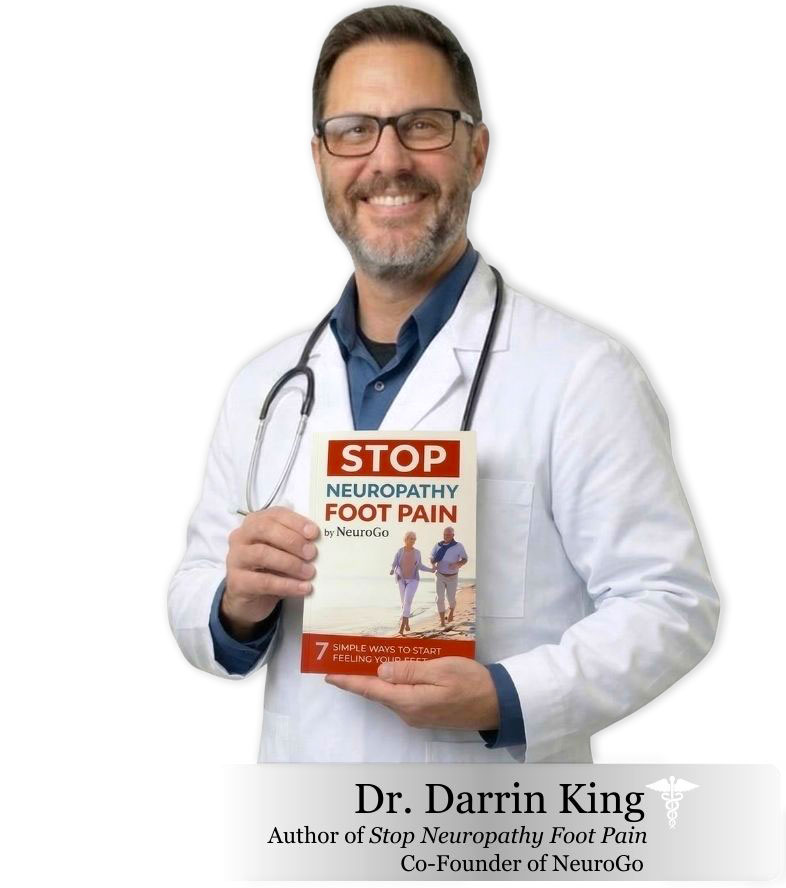
I'm Dr. Darrin King. I built NeuroGo — the device that review graded an A. You’ve read why circulation is the lever most treatments never touch. An article can tell you why circulation matters. It can't tell you whether your feet fit the approach — that's what your answers above just did. So let me skip what you already know, and show you where this device came from.
Blood flow is the switch. Shut it off, your nerves burn, tingle, and go numb. Turn it back on, they heal and the pain backs off. You've read it; here it is in one picture.
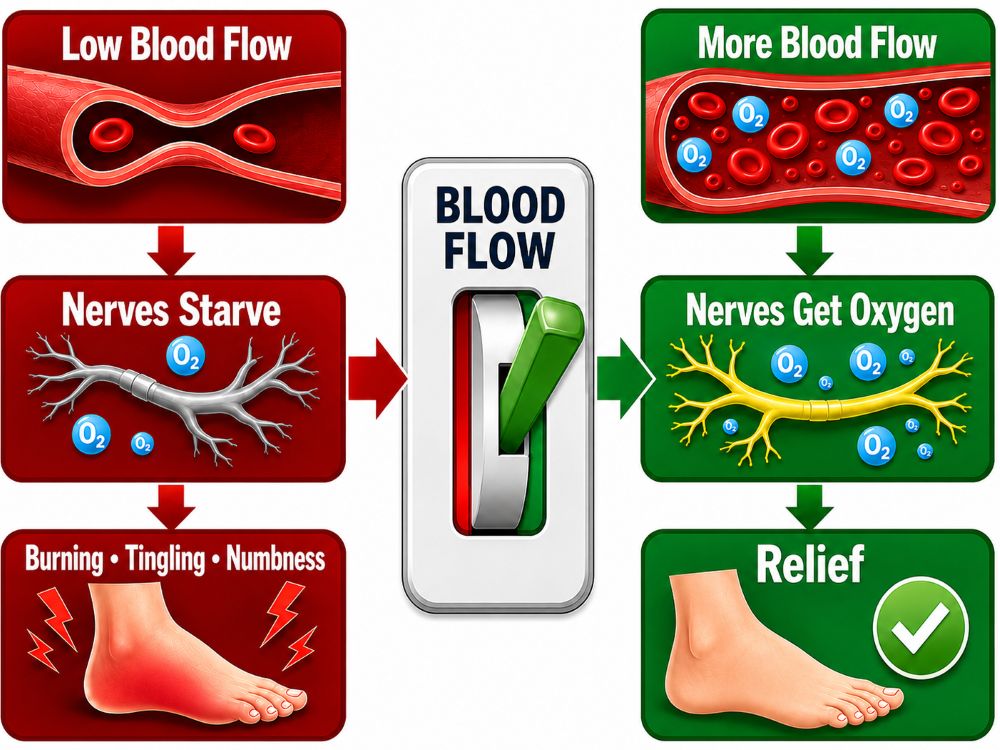
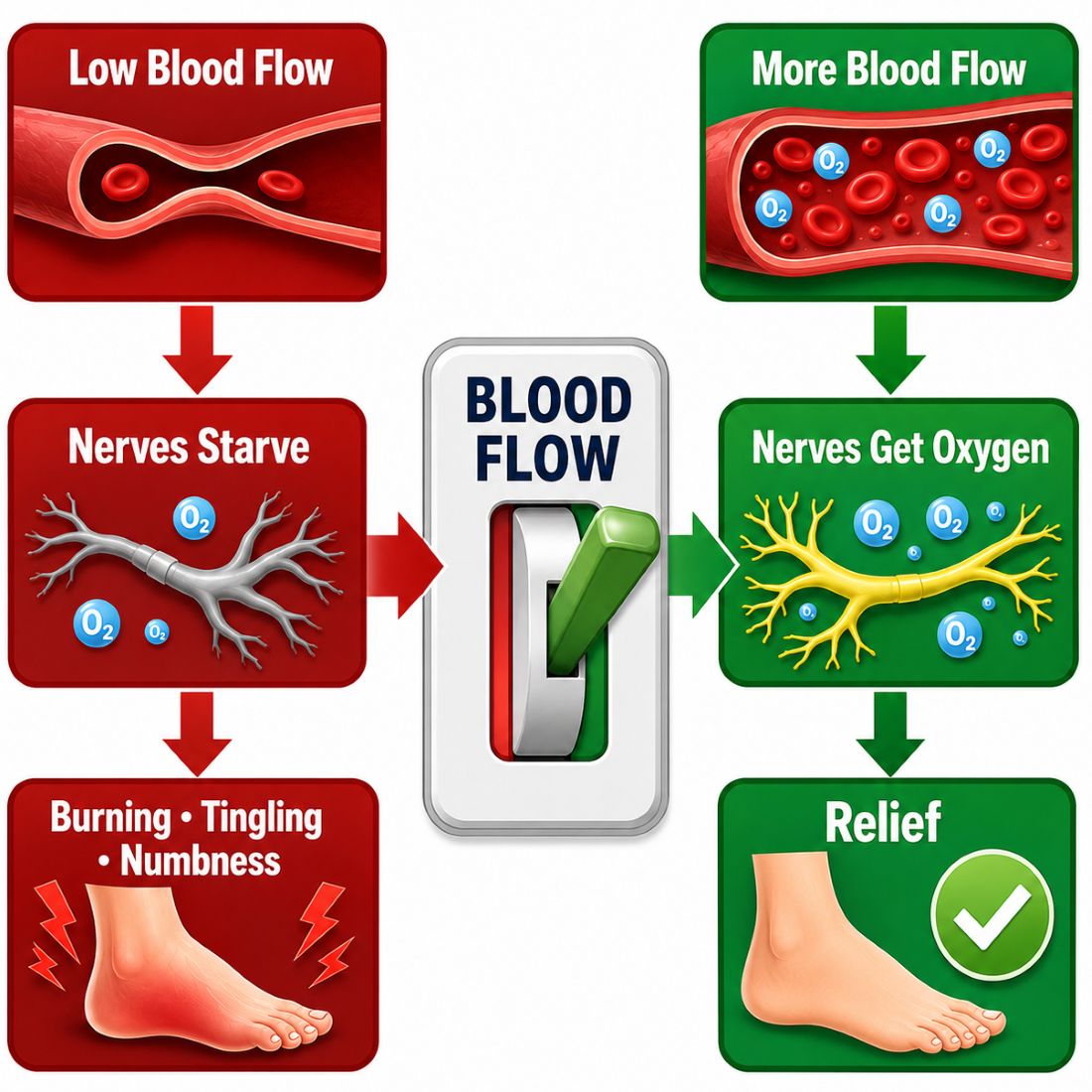
As long as you can still feel your feet, those nerves are alive, not dead — so they can still respond.[2] The only question left is how you bring that blood flow back.
Everyone chases the nerve damage. Almost no one asks what's starving it. Your feet sit farthest from your heart, so when circulation drops, they're first to run short — and here's the part most people never hear: the nerves themselves have their own blood supply to lose.[1]
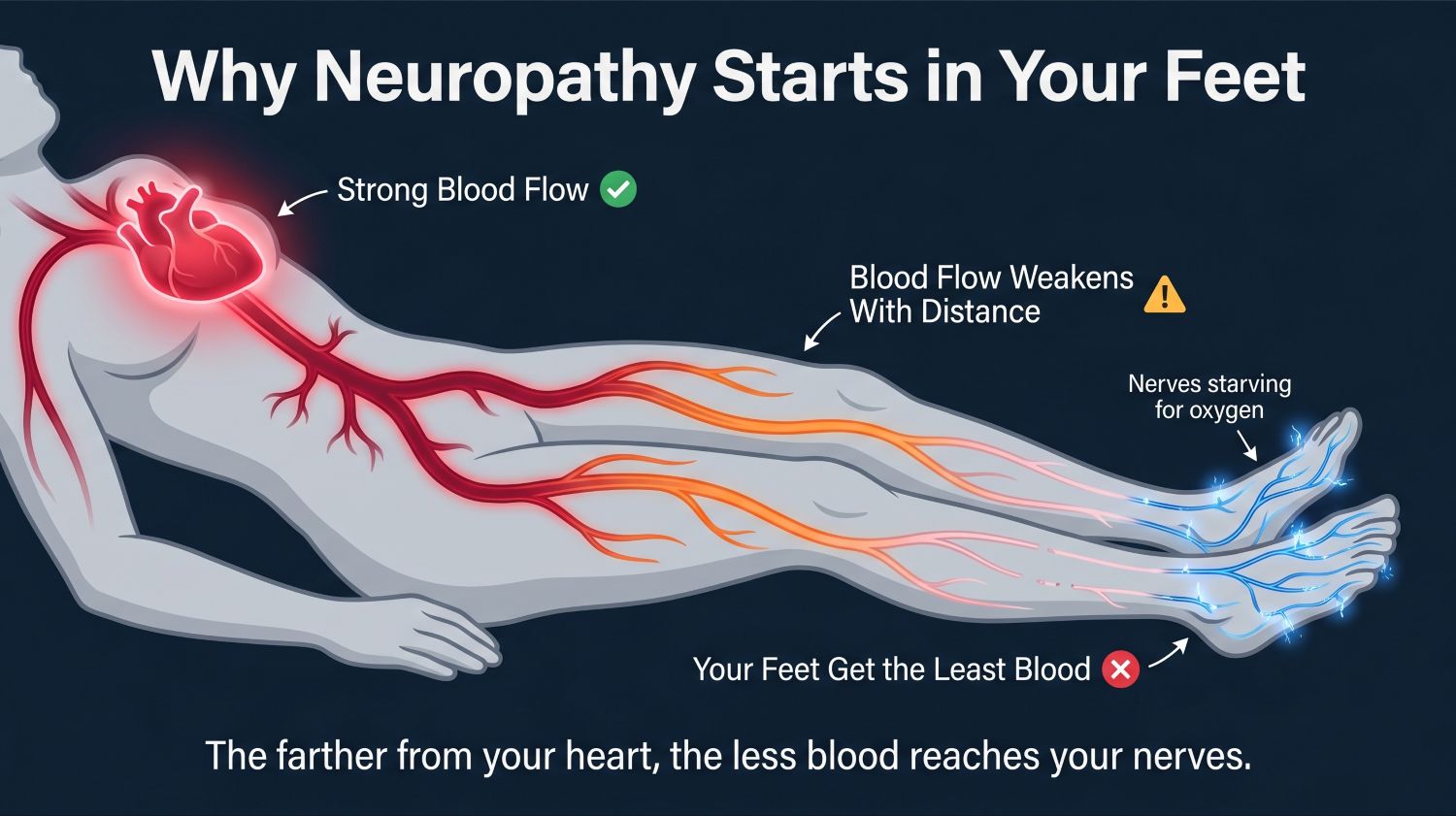
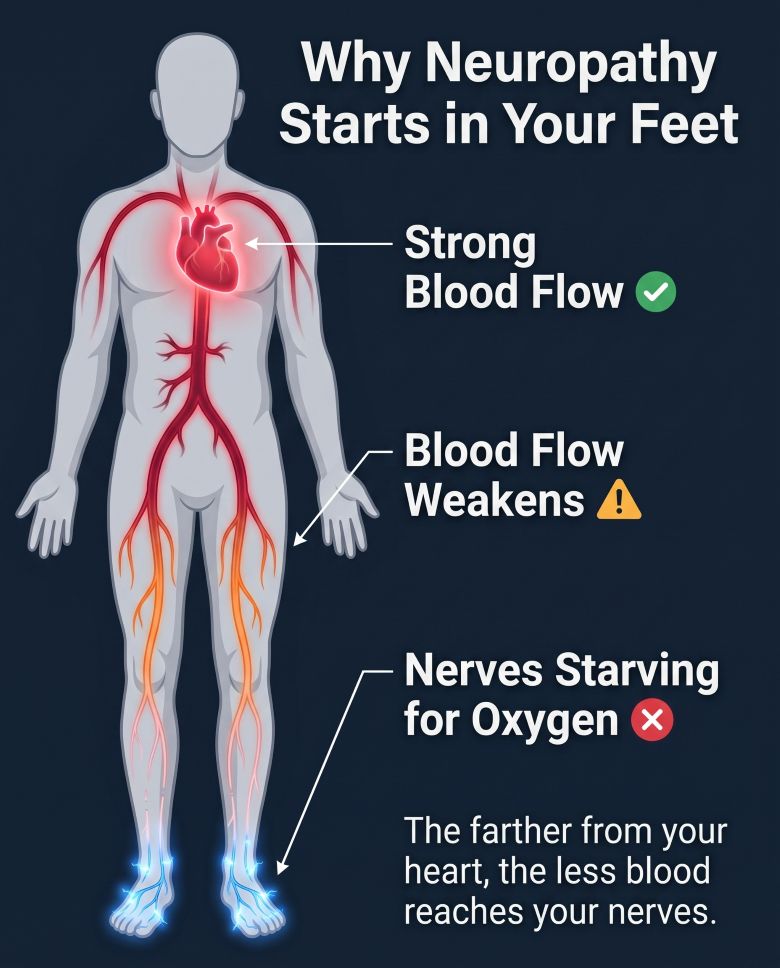
Every nerve is fed by microscopic vessels of its own — the vasa nervorum — delivering the oxygen and fuel it needs to fire cleanly.
When circulation to your feet falls, those tiny vessels can't keep up. Low on oxygen, the nerve sends faulty signals — felt as burning, tingling, and numbness.
Restore the blood flow and oxygen returns while waste clears out. The irritated fibers calm down and get what they need to recover.
That's also why pills, creams, and supplements fall short — they quiet the signal but never touch the blood flow underneath it.
They can quiet what you feel. They do nothing for the blood flow underneath.
Bring more circulation back to your feet, and the irritated nerves behind the pain get what they have been short on.
You were not failing. You were working on half the problem.
The answer already existed. Clinics have used it for years: NMES, short for neuromuscular electrical stimulation. It gently pumps fresh blood back down to your feet — the circulation your nerves have been starved of.
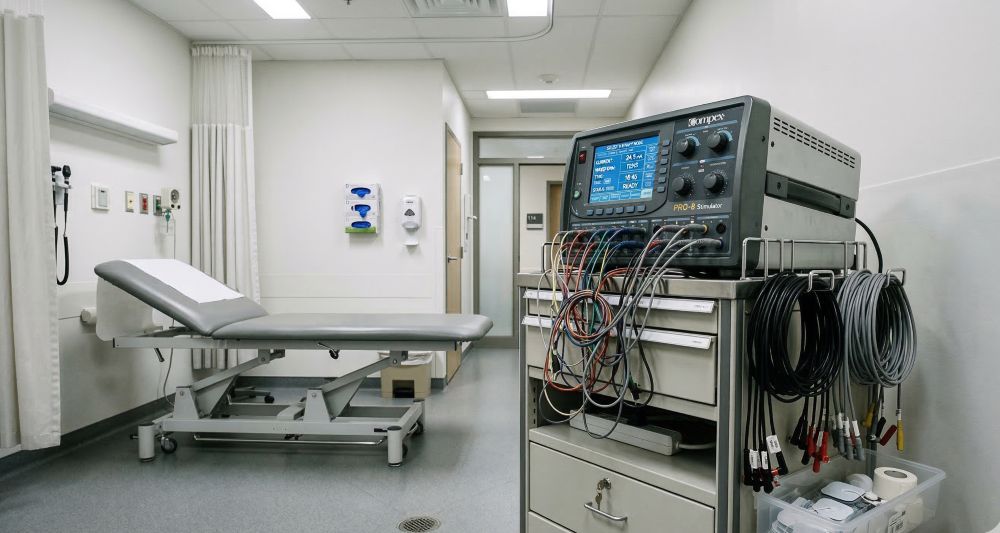
So I shrank it. I put the same therapy into a simple pad you rest your feet on at home, for a fraction of the cost. I called it NeuroGo, and I put my name on it. Because if it doesn't help you, I don't want your money.
It stimulates the nerves in your feet and lower legs. The muscles squeeze and release on their own, pumping fresh blood back down to your feet for a temporary increase in circulation.[3]
That returning blood flow is what the nerves in your feet have been short on. And you don't lift a finger. The device does the work.
Pulse in. The muscles squeeze. The blood flows back to your feet. And the pain backs off.
The catch: the clinic version is the size of a nightstand and lives in a rehab department, not a living room. That's what I set out to fix.
This won't take over your life. Nothing to tape on, nothing to strap, no app, no Wi-Fi. Here's the whole routine.
Bare feet, in your favorite chair. Nothing to tape on or strap.
Start low. Turn it up until you feel a gentle pulse. You stay in control the whole time. No shocks.
Watch TV. Read the paper. The device does the work.
Many people feel something from the very first session. That's the blood flow coming back. It only gets better from there with regular use.
Your feet feel warm. Your toes start moving on their own. For many, it's the first thing they've felt in a while.
The burning at night starts to settle down. Less reaching for the ice pack. Less stiffness in the morning.
Walking feels steadier. The floor feels solid. The tingling is quieter. People around you start to notice.
*Individual results may vary. Testimonials reflect personal experiences and are not guaranteed outcomes.
Enough about how it works. The real test is what it does for people like you. Ray, Carol, and Bill were all told the same thing you were: just live with it. None of them did. They're three of more than 52,000 people who gave NeuroGo a try instead.
Click a Name to Read Their Full Story
Ray never called it pain. That was the odd part. His feet didn't burn or ache. They just slowly went quiet on him. First his toes, then the balls of his feet, until the bottoms felt wrapped in thick rubber.
He'd worked on his feet his whole life, so he chalked it up to age. Then one morning he stepped into the shower and couldn't feel how hot the water was. Not until it hit his ankle. That one scared him.
For 15 years he heard the same things. "Watch your sugar." "That happens when you get older." "Not much we can do." So he learned to live small. He'd shuffle. He'd grip the handrail. He kept his eyes on the ground instead of where he was headed.
Then his daughter ordered him a NeuroGo. He wasn't expecting anything. A few minutes in, he looked over at his wife and said, "I think I can feel that."
"I had a feeling sensation after my first session. After 15 years of numbness."
Carol used to plan her whole day around her feet. Not her errands. Not the grandkids. Her feet. If something was too far from the door, the answer was no. That's how small her life had gotten.
The pain took over both feet. She tried scans, injections, special shoes, one pill after another. Then surgery. Then a second one. Then a third. She walked in hopeful every time. The pain was always still there when she walked out.
After six years, a doctor finally told her, "You may just have to manage it." To Carol, that sounded like, "stop expecting your old life back."
She found NeuroGo after another long night sitting up, rubbing her feet in bed. What she liked was simple. She could just sit down and use it. Fifteen minutes in the morning, fifteen at night.
Then one day her granddaughter asked her to come walk outside. For once, her feet didn't scare her. So she went.
"After 6 years and 3 surgeries on my feet, I'm finally pain free."
"I feel like I'm walking on marbles half the time. I never know when my foot will miss the ground."
Bill wouldn't say he was scared of falling. He called it being careful.
But he was thinking about every step. Across the yard. Off a curb. Getting out of the shower. He'd stumbled in the garage once, caught himself on the counter another time, and after that he held the furniture and kept his eyes down.
His doctors checked his circulation and told him to be careful, maybe use a cane. "At your age, fall prevention is the main thing." But Bill didn't want to fall less. He wanted to feel steady again.
A friend from church mentioned NeuroGo, so he tried it in his recliner. A couple weeks in, he walked out for the mail and didn't stop at the front step the way he used to.
"I feel more sure of the ground now."
*Individual results may vary. Testimonials reflect personal experiences and are not guaranteed outcomes. Reviews may be lightly edited for length and clarity.

NeuroGo works — with real, lasting relief needing consistent daily use for about 30 days. You have up to 90 days to return it for a refund. Use it consistently for 30+ days and we'll cover return shipping — no hoops, no fees, no hassle. Zero risk. You only pay if it actually works.
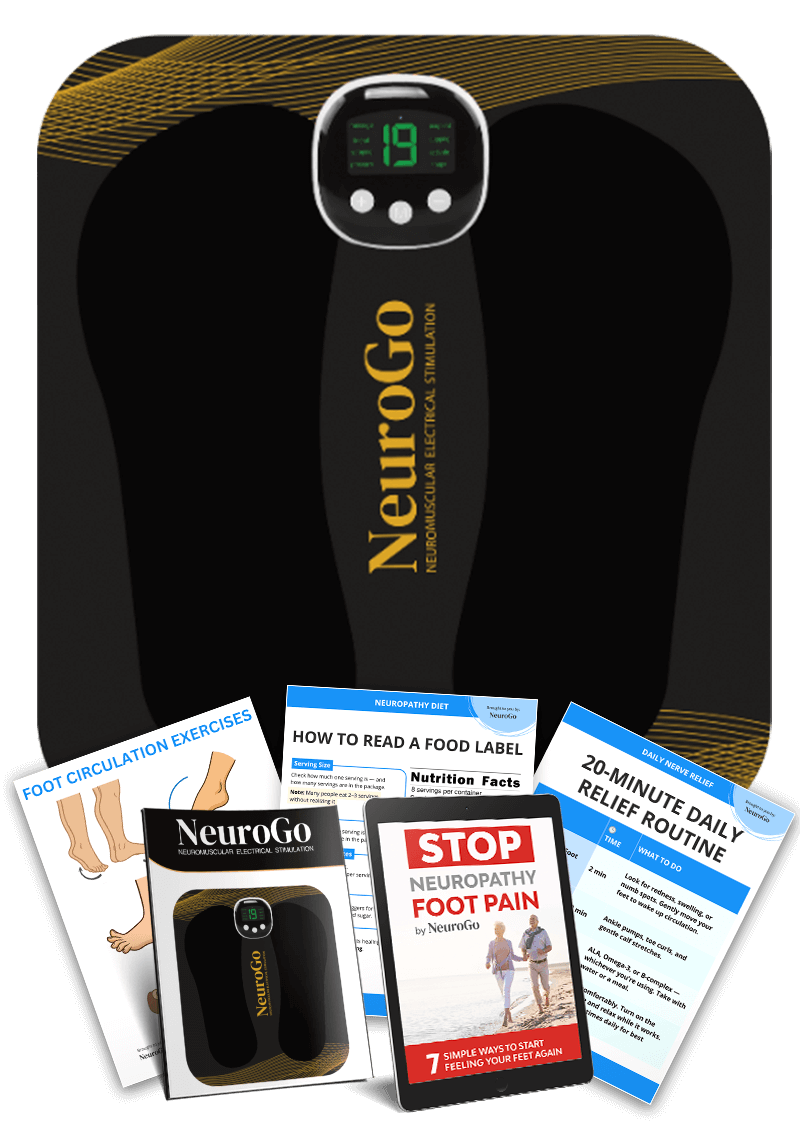
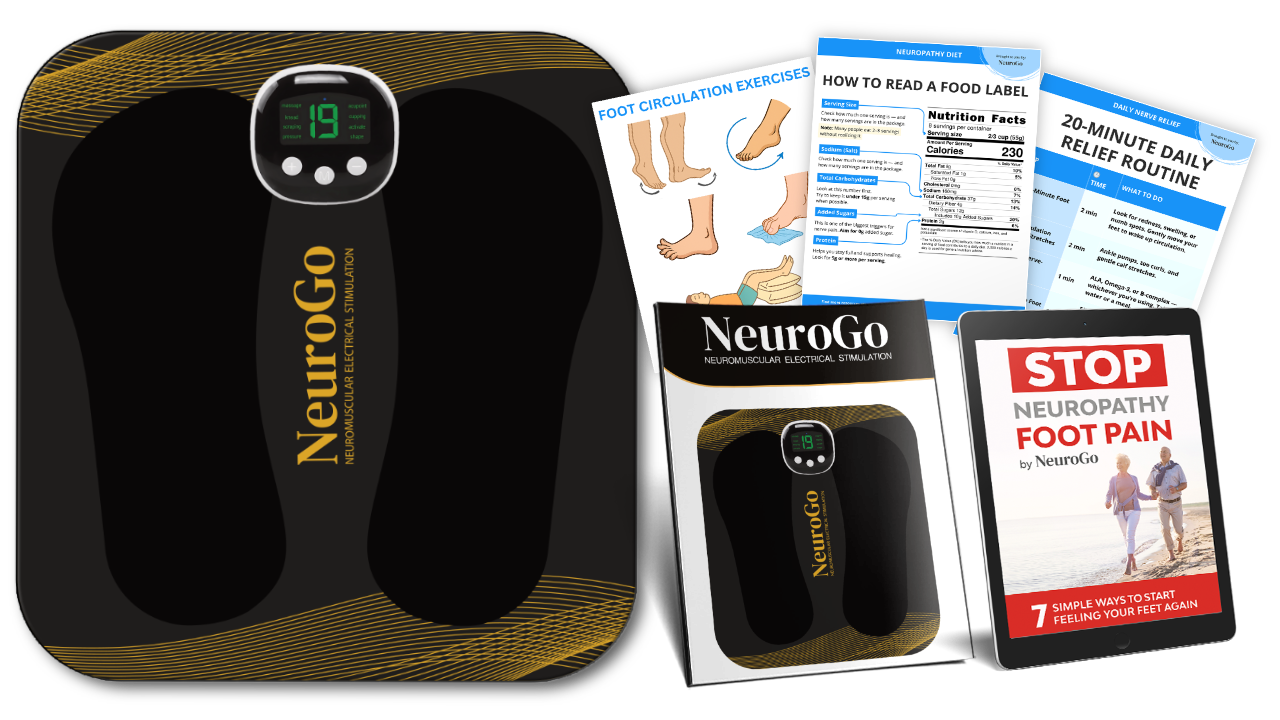
The at-home device that works on the blood flow your feet are short on. 52,000+ people. Inside Health readers save $100.
Free with your order: Dr. King's 150-page neuropathy guide, nerve-friendly food swaps, circulation boosters, and the private VIP community.
July Flash Sale price ends Sunday, July 12
CLAIM YOUR DISCOUNT NOW → Try it risk free. 90-day money-back guarantee.
July Flash Sale price ends Sunday, July 12. One-time payment. No subscription. 90-day money-back guarantee.
Straight, honest answers to what people ask most.
No pressure, and nothing to buy. If you're still not sure, let me hand you the book I wrote for exactly this moment, so you can start helping your feet tonight, for free.
Free, and it lands in your inbox in about a minute. No subscription — just the book.
Already decided? See the offer →
The pain finally eased. I had pain from my calves down to my toes — this helps relieve it. Very impressed, and glad I purchased it.
A no-hassle refund. I asked about returning my unit and was blown away — no hassle, nearly an instant refund. Great to know honest businesses still exist.
I can feel my feet. I use it every day. My feet were totally numb and now I can feel them.
Indications for Use: NeuroGo is indicated for temporary relief of pain associated with sore and aching muscles in the legs and feet, symptomatic relief of chronic intractable pain, relief of pain associated with arthritis, and temporary increase of local blood circulation in the healthy muscles of the lower extremities. Not intended for use in any therapy or for the treatment of any medical conditions or diseases.
Contraindications: Do not use if you have an implanted defibrillator or deep vein thrombosis (DVT). Do not use during pregnancy. Consult your doctor before use if you have a cardiac pacemaker or other implanted electronic device. Do not apply over open wounds, rashes, or skin eruptions. If you have reduced sensation in your feet, start on the lowest setting. Do not use while driving, operating machinery, or in the bath. Always consult a qualified healthcare provider with any medical concerns.
Results Disclaimer: Individual results may vary. Testimonials reflect personal experiences and are not guaranteed outcomes. NMES is a widely used technology in clinical rehabilitation settings. NeuroGo is not affiliated with or endorsed by any institution referenced on this page.